The beginning of Henry’s story

My brother Henry would be 72 years old today, September 2, 2019. I have wanted to write about him ever since he died, back in April 2018, but have had trouble getting started. I decided to start his story today. I will add to it as I am able.

Henry’s story started on September 2, 1947, in Akron, Ohio, when he was born. But this story starts a few days after May 18, 1950, because that’s the earliest date Henry could remember, and it’s when the story teller’s story started. Henry was not sure that the ride to the hospital was a real memory. He thought he might have manufactured it after having been told about it many times. But the facts are right.

Henry and our father came to McCall Hospital a few days after I was born to pick up me and our mother and take us home.
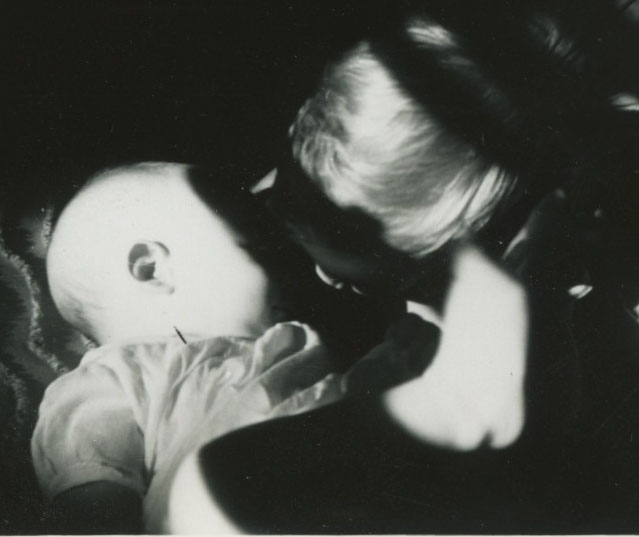
Me, as a baby, and Henry, as a very young little boy

Home was 19B Redmond Road, the third house on the left, at the intersection with Leland Avenue. Our house was one of a long line of almost identical houses on both sides of the road. They were at the edge of Summerville Park, a little four-block-square neighborhood bounded by the Berry College campus on the north, Martha Berry Boulevard on the east, and Berry property on the west. There was a swampy low area around a creek on the south, and just beyond it a dirt road that passed a brick yard with several domed kilns.
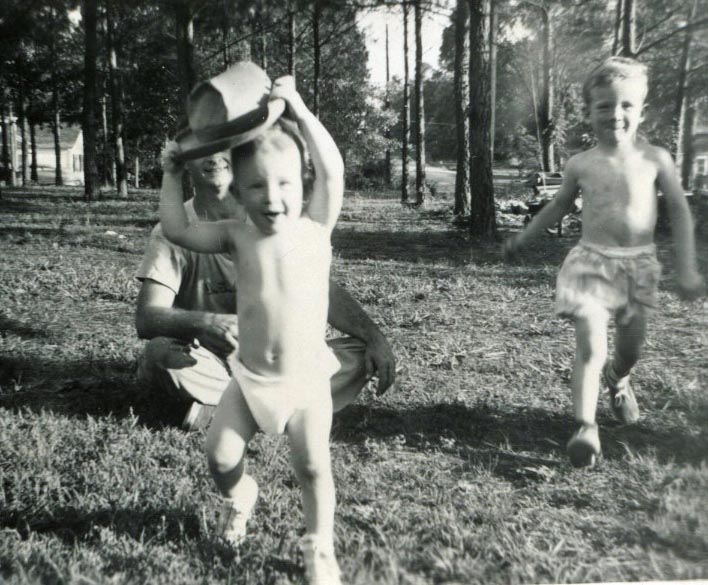
Our back yard, me breaking with my father’s hat

Our row of houses was built as temporary housing for Battey Hospital, which was at the end of the long straight section of Redmond Road where we lived. Battey had a nice, college-like campus with multiple buildings and a little residential area. It was separated from Summerville Park by a forest of tall loblolly pines. Battery was built during World War II as a hospital for injured military. It became a tuberculosis sanitarium around 1946, and that’s what it was when we lived on Redmond Road.
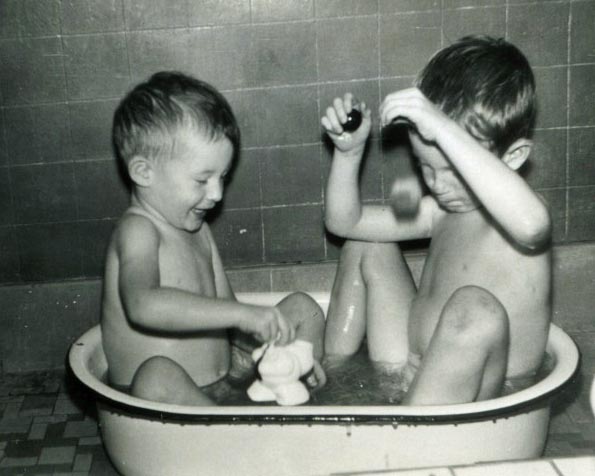
When were ever that small?

The rest of the houses in Summerville Park were a mix of (probably) late 30’s homes, small but mostly neat. Our house was utilitarian. Each side of the duplex was a mirror image of the other. I guess each side was about 30 feet square. There was a small eat-in kitchen with a gardenia right outside the window, a living room, two bedrooms and a bathroom. In the center, with a door from each room, there was a hall with a floor furnace. All of our shoes showed a singed grid pattern on the soles from standing on the floor furnace in the winter.

Our father built an enclosed back porch where our washer and dryer and our freezer were. He built the room by himself.
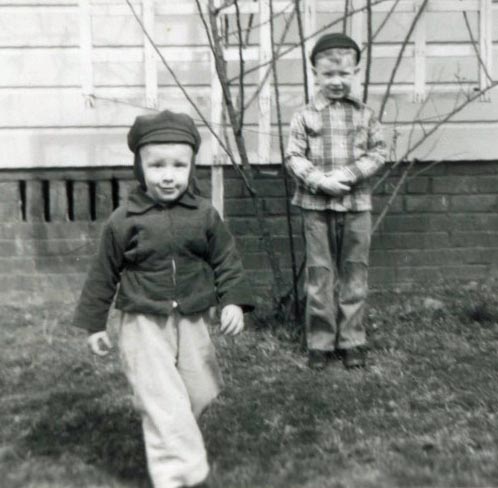
Henry follows orders, I do not. I want a close-up.

Henry and I shared a bedroom, which was probably the interior room. We had twin beds. Our father, who liked model trains, built a folding train table. It folded up between sets of shelves against the wall, and could be lowered down between our beds. We could fold it down and have two ovals of track, one in S-scale for our American Flyer train, and one in HO scale, for our father’s train. Henry used parts of the shelving units when he built a Wilson cloud chamber when he was a teenager. A cloud chamber is a device used in early particle physics. It is typical that Henry would build something like that.
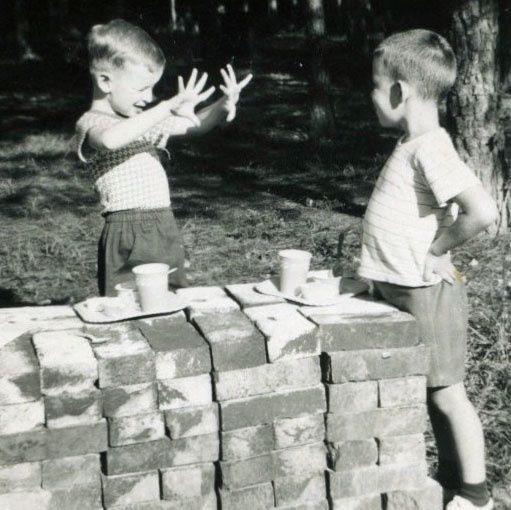
Henry explains things to a neighborhood boy.

Our parents had the corner bedroom. The little living room had a sofa and an overstuffed chair. Our father built a cabinet for a little black-and-white TV, a radio, and a turntable.
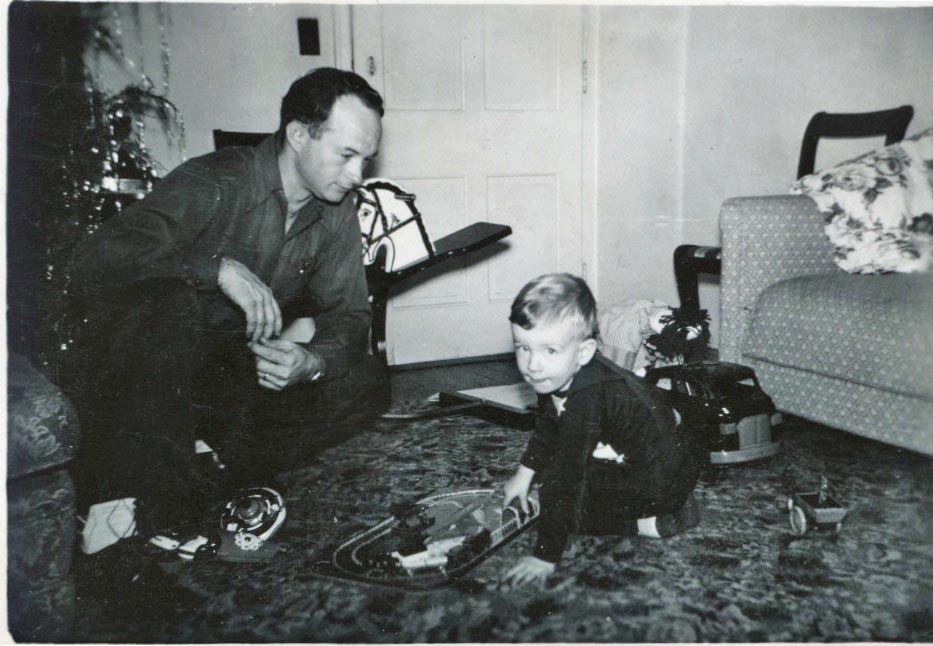
Christmas morning in the old duplex.

There was no air conditioning, of course. We eventually bought a window unit for the living room. When our father’s job changed at the Post Office, he had to work nights and sleep during the day. They bought a little window unit for their bedroom, mainly to provide white noise to drown out the noises the rest of us made.
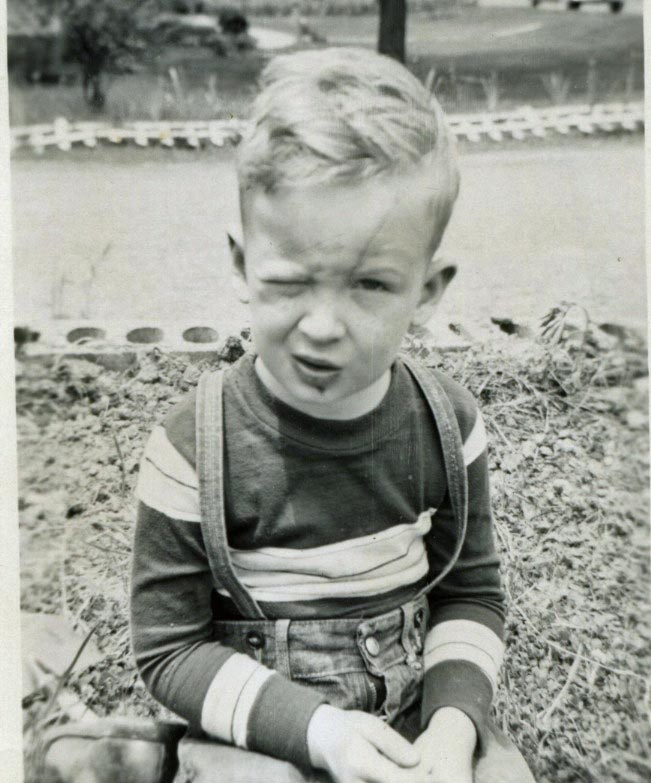
No smile here.

At some point in the late 1950’s we took over the other side of the duplex. Our father reinforced the ceiling in the attic and tore down the wall separating the two living rooms. Henry’s bedroom moved to the far corner, and mine moved to what had been the interior bedroom of the other part of the duplex. What had been our bedroom became a den, where the TV was placed. We had an antenna on a pole right outside the window, so we could twist the pole to adjust the antenna for better reception. We could get the three networks on Atlanta stations and the same three networks from Chattanooga stations.
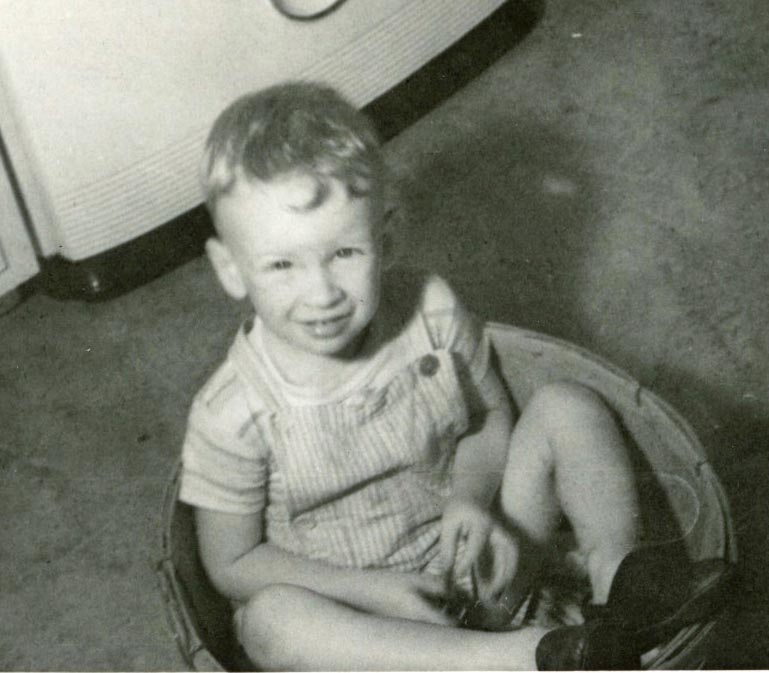
A little smile here.

In the summers we played flies-and-skinners, a baseball game with a hitter and a bunch of kids trying to catch the balls on the ground (skinners) or in the air. We played kickback in Leland Avenue, a football kicking game. We played kick the can. We believed that we had the right of free passage across all of our neighbors’ yards. We didn’t know how they felt about that, and we didn’t care. We crossed two other yards to reach “the woods”, a pine thicket between the last house between us and Martha Berry Boulevard.

“The woods” was divided into the familiar section closest to civilization (our house), and a less well explored section closer to the highway. The familiar area was where we built our forts. Several trails led into the wilderness, but we seldom went there.
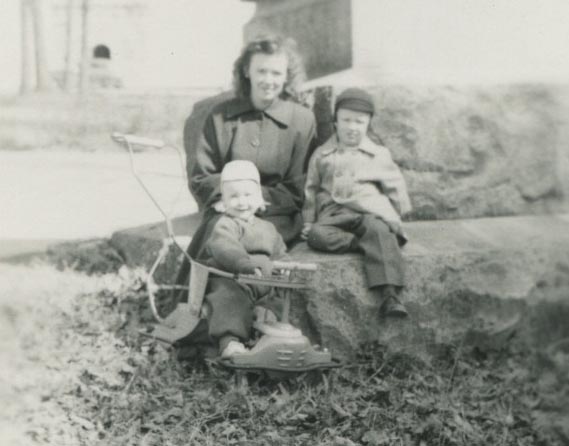
Mother and children

The woods also bordered the property of an old, abandoned mansion. On the other side of the mansion were the Glenwood Apartments. Sometimes when we felt especially wicked we would sneak up to the corner apartment, where all the electrical switch boxes were mounted. We would throw the switches to turn off power in some, possibly all the apartments in that block, and then run back home.
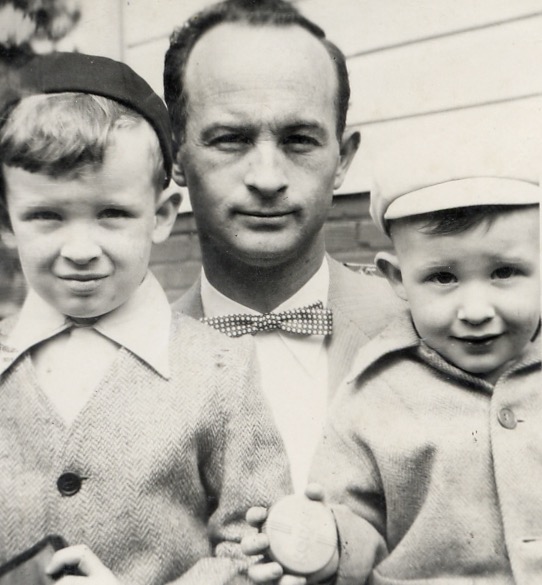
Father and children. Caps are so cool.

There was, and still is, a city park on the diagonally-opposite corner of Summerville Park. The city provided games and athletic equipment, plus a teenaged supervisor, for the neighborhood kids. We rode our bikes to the park most days. The hills were much higher and steeper in those days than when I drive over them today.

In 1953 Henry started elementary school at Fourth Ward School, two houses down from our father’s old home and a mile from ours. That was when Henry started his new life away from home, while I was still there, just three years old, still a baby. Almost all the memories of our lives are from after that time. Most of the memories are episodic, and they usually center on me, since at that age, all kids are selfish little barbarians. 
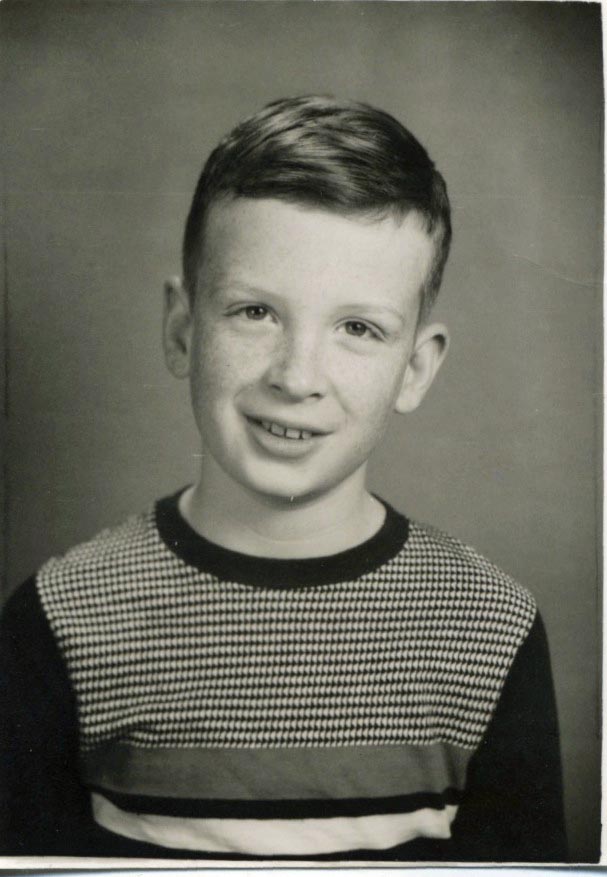
One of Henry’s school photos. He rarely smiled.

It was only in going back to those early days and trying to remember how we all lived that I realized how little interaction there was between two boys separated by almost three years in age. One of my earliest memories of those days is me chasing on foot after Henry, who was riding his new little bicycle down the street. For many years that was the kind of feeling I had about our relationship; Henry was forging on with a three-year head start, and I was struggling along behind him, handicapped by my own age.
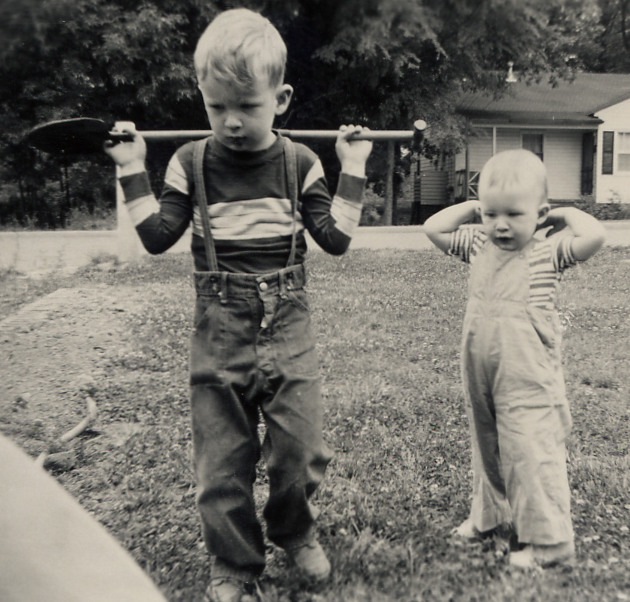
I have no shovel, but I must try to hold it over my shoulders. Because Henry.
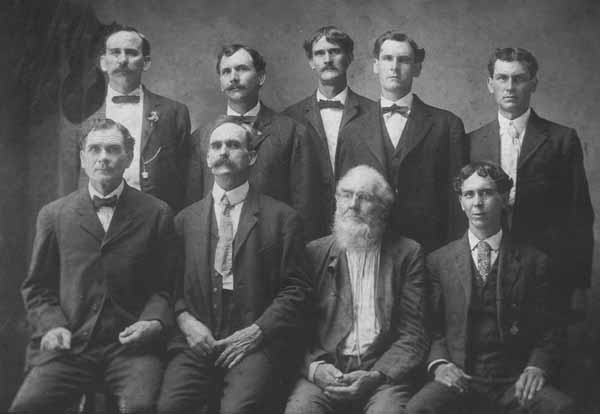
The Paris Gang

Ever since my Uncle Tommy died not long ago, Leah and I have been meeting Aunt Micki for lunch almost every Wednesday. A couple of cousins also come to our lunches. We have not had this much interaction with my relatives in a long time, and both of us enjoy it.

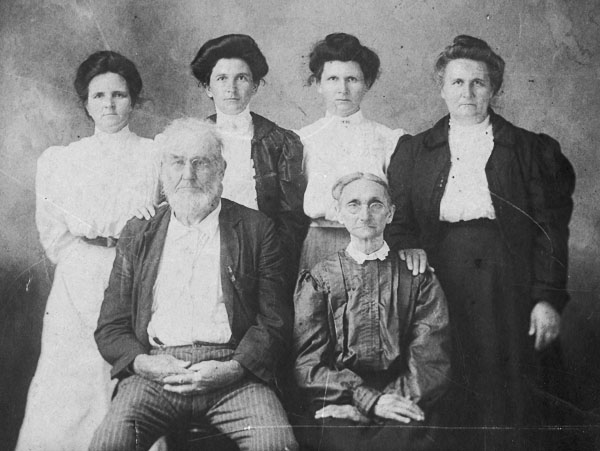
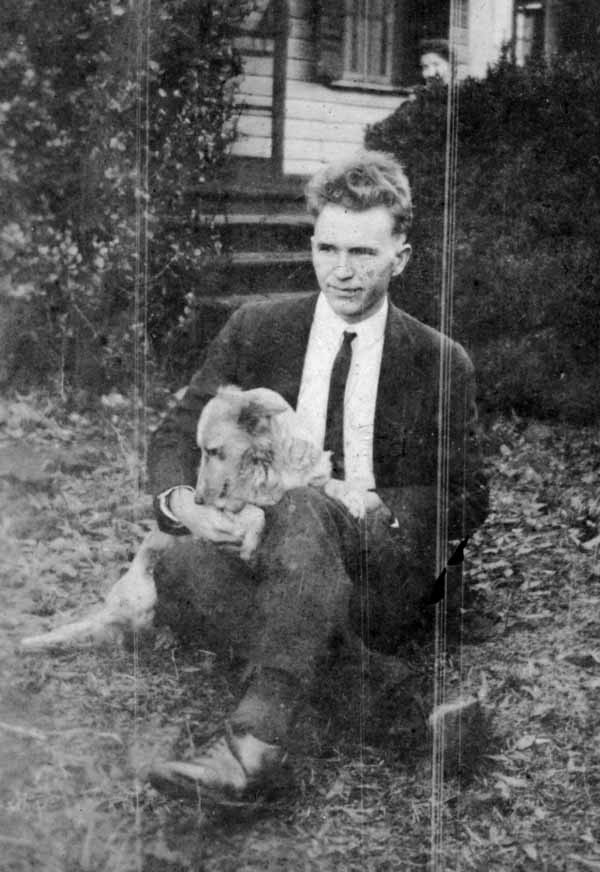
On Friday, we met Micki at a chicken place. She brought along one of her long-time tennis partners. It turns out her long-time tennis partner is my cousin. Her grandfather was my father’s grandfather, and her mother was my father’s aunt. She brought along family photos of her grandfather and his eight sons, and her grandfather and grandmother with their four daughters. One of the sons was Grady V. Paris Sr, my father’s father.

The bearded fellow in the front row is her grandfather, and all the rest are her uncles. Leah and I think my grandfather, Grady Sr, was the second from the right in the rear. Here is a photo that I think is my grandfather with his dog.

Here is the photo of my great-grandfather with his wife and their four daughters.

The poor, little lady sitting next to my great-grandfather was the mother of those eight boys and four girls. It’s no wonder she looks played out. The sister with her hand on her mother’s shoulder was my newly-found cousin’s mother.

I have met only one of the people in the picture of the men, and I do not know which one it was. He was called Ab. Apparently he was a riverboat gambler at one time. Today there is no way to verify that story, since anyone who could know of it is long dead.

The men are not named on the photograph. My cousin said hers is a just a copy that she got from her brother (now in his 90’s). She hopes her brother’s possibly original photo has names on the back. If so, we can identify my grandfather and Great Uncle Ab for sure.

It seems that the Paris family is pretty big. It also seems that I am descended from a dog lover. No surprise there.

Clematis reborn

My parents had a clematis growing on their mailbox. It was a healthy and profusely overgrown. We wanted one for our mailbox, so we planted one last year. It was small, but it grew. Early this summer it began to bloom. It had large, lavender flowers.

And then one day I noticed some of the leaves had turned brown. I cut the branch off. Then a few more leaves turned brown. Then they all turned brown and shriveled up and died. I looked up the symptoms, and it seems we had a fungal infection, called clematis wilt.

There is apparently no treatment for clematis wilt. It eventually kills the plant back to the ground. So where we had a nice vine with a good bloom before, we ended up with a bare trellis and mailbox. The information I found gave some hope that the roots would survive, so we thought maybe the clematis would come back next year.

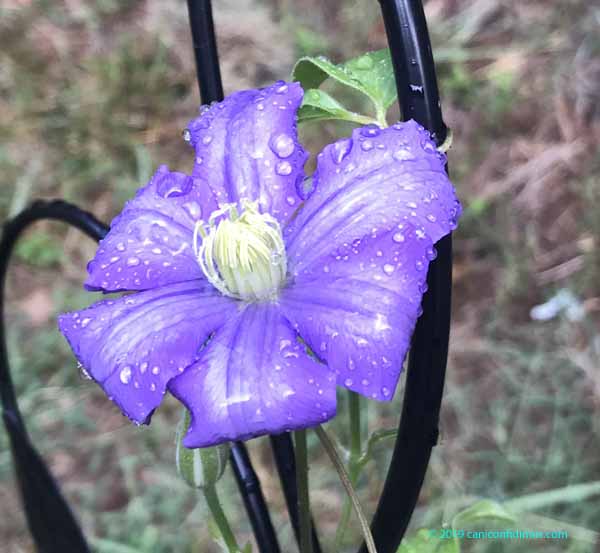
Surprise. It came back this year. I noticed a couple of bright green leaves at ground level first. I wasn’t sure it was actually the clematis, but it kept growing. Fast. So fast it seemed that if I turned my back on it, it would grow two inches by the time I turned back around. And it had lots of buds. One of them bloomed some time between Thursday evening and Friday morning. It rained lightly overnight, and a the flower was still wet when I took this photo.

Clematis comes in various forms, some shrubby and some climbing, like ours. There are some varieties that can grow quite tall, up to maybe 20 feet. Ours is not one of those, although it would be nice to have one like that. They are fast growers, as I can attest from ours. They are deciduous in our climate, so ours will lose its leaves over the winter, assuming it survives. If it keeps going as it is now, we should easily get a dozen or more blooms before cold weather.

Dishwasher revived

I mentioned in an earlier post that our dishwasher had died. I did some online research, which recommended a diagnosis routine, which indicated that our dishwasher was brain dead. So I ordered a new brain.

The brain came. I did some more online research and found a video that showed how to do a brain transplant. As usual for such things, the video instructions were both complete and incomplete.

The instructions showed a disembodied hand opening the front panel and removing some screws. I opened the front panel and found more than one screw in the indicated location. After one false start I identified the correct screws.

Then the instructions said to remove two more screws, after which the brain pan would drop down, conveniently exposing the dead brain. I removed the screws, and the pan did not drop. I had to pry, which was not easy. But eventually doable.

I removed the old brain and installed a new one. I closed, and then turned the power back on. Of course I had flipped the circuit breaker before touching all those electrical connections between the brain and the rest of the dishwasher. Lights appeared on the control panel, a good indicator, but not conclusive. A test dishwashing was required. Fortunately, we had dirty dishes. I set the washer to come on at 2 am and got up the next morning to clean dishes. Victory!

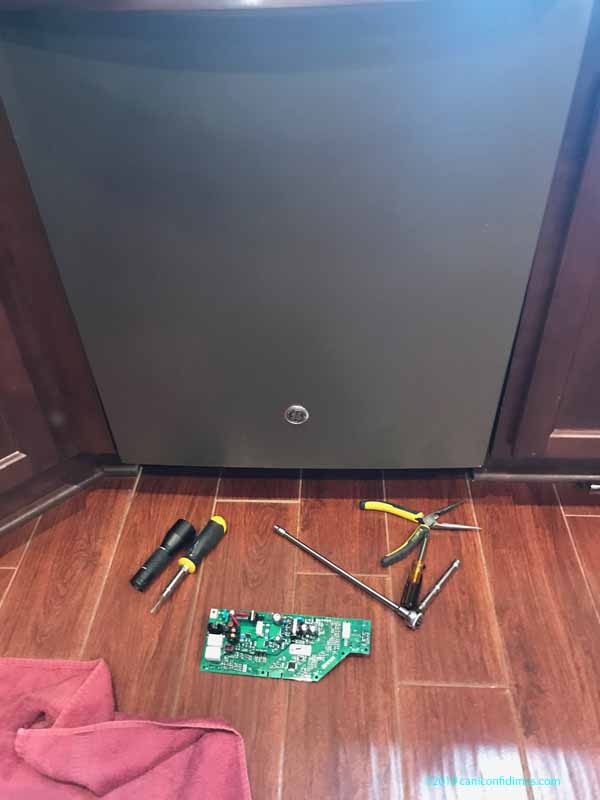
Here is the offending circuit board and all of the tools necessary to do the repair.

By the way, the floor is hard.

Sam runs

I have been able to walk outside with every dog I have ever had and trust them off the leash, except one — Zeke. We have had Zeke so long that I had forgotten what it was like to have a dog off leash and not have him immediately run away.

That’s why it feels so odd when I let Sam off leash. We have had him for about three and a half years, and in all that time I have walked him and the other dogs on a leash. Recently I decided to let him off the leash and see what he did. What he does is act like a normal dog. He doesn’t run away. But he is very happy to be off the leash. I take both dogs into the front yard and then let Sam loose. He usually runs around for a while like he’s crazy. He runs figure 8’s around the yard. I wanted to video him doing that, but this is the best I could do.

The bare ground where he stopped for a second is one of the sections of the yard I prepared for grass but never got any grass to grow. The dirt is well tilled and soft, so the cats consider it a perfect toilet. Dogs, as you may know, sometimes eat cat poop. I have read a bit about that particular disgusting habit, but I can’t say for sure why they do it. But they do. And Sam does.

One afternoon last week as I was sitting at my computer, Sam came in a laid down beside my chair. Then he threw up a big mess of liquid, a few pieces of dog food, and a couple of pieces of still-recognizable cat poop. Now you may think dog vomit smells bad, and you may think cat poop smells bad, but you don’t know the meaning of “smells bad” until you smell the two together.

I keep an eye on him now to make sure he doesn’t get too interested in rooting around in the loose dirt. It is fortunate that he minds reasonably well, like all of my other dogs except Zeke.

And now, as to Zeke. A little after lunch on Thursday Zeke got out. I immediately started driving around to try to find him. I actually saw him in a neighbor’s yard almost right away, but he disappeared before I could get to him. I drove around for about a half an hour with no luck, and then decided to give up for a while. As I drove up the driveway, I saw him lying in the shade of our pet maple tree. This was just as Leah was coming down the front stairs. By the time I parked my truck and came back around to the front yard, he had disappeared down the driveway. Leah said he was not moving too fast, so I gave chase.

In my case, “chase” is a charitable way to describe the way I followed him. I couldn’t go much faster than a fast walk down the driveway because it’s too steep for my knees. But I saw Zeke and I was gaining on him. He looked behind him, saw me, and quickened his pace. Not long ago he would have easily left me behind, but not today. When I reached the road, I managed to speed up and catch him. I don’t think he actually heard me because of his hearing problem, but he stopped as soon as I put my hand on his back.

Fortunately for me, I had taken a naproxen the night before, and it really helps my knees. Otherwise I could probably not have managed the “run”, and my knees would have been hurting afterwards.

But how sad for Zeke that an old man with bad knees could catch him.