It’s still dry

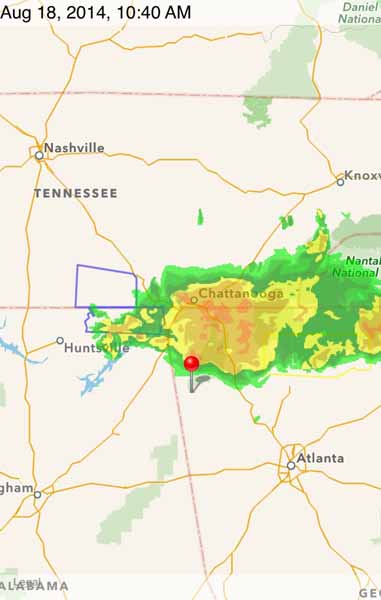
When I posted on August 6 that we were dry, we had received 2.24 inches of rain since May 10. In the time since, nature has been taunting us with heavy rain to our west, moving our way, and then a few drops when it reaches us. This was the weather radar this morning at 10:40.

aug18_1040

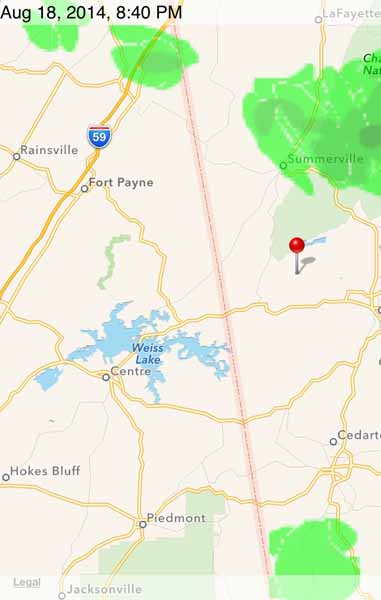
There was a very nice and fairly large thunderstorm passing just north of us. We could hear the thunder. We didn’t even get a sprinkle out of it. We’re at the pushpin.

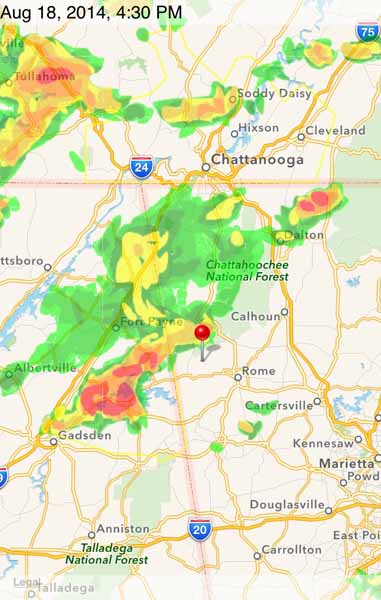
This was all lined up and heading towards us later in the afternoon.

aug18_1630

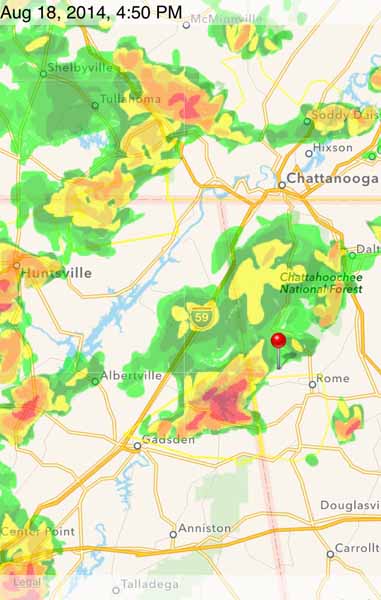
We’ll get rain out of this for sure, right. Here it is 20 minutes later

aug18_1650

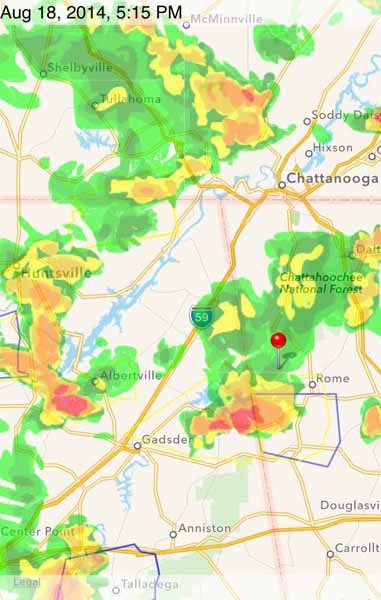
And then this. It looks like we’re getting rain here, doesn’t it?

aug18_1715

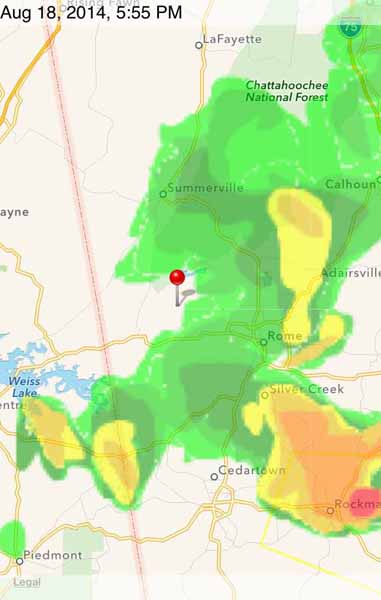
And then it was gone.

aug18_1755


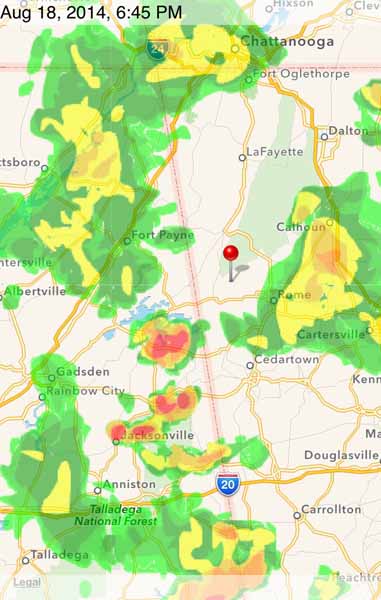
But, look, here comes more, out to the west.

aug18_1845

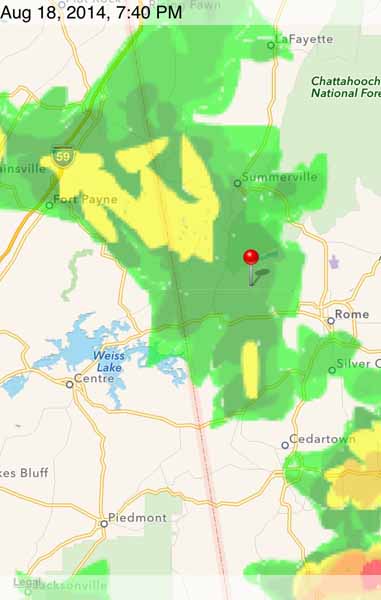
You know we’ll get a lot of rain out of this one. Here it is, and we’re in it.

aug18_1940

And then it was gone. I checked the rain gauge. Three-tenths of an inch for the day, and this is what it looked like later in the evening.

aug18_2040

So with this 0.3 inches of rain today, we have had 2.58 inches since May 10. The rain chances for the rest of this week are going steadily down, and the forecast is for 90s the rest of the week peaking at 98 F by Friday. I wonder if it will ever rain again.

Heartening results

I went to see one of my two cardiologists on Wednesday to get the results of an echocardiogram I had the previous week. I was diagnosed last summer with reduced heart function. The amount of blood my heart was pumping (the ejection fraction) was measured as 35 percent of the volume of the chamber at rest, which is somewhere between 50 and 65 percent of normal (there is a range because the average amount of blood the heart pumps relative to the volume of the chamber has a range of 55 to 70 percent). An ejection fraction of 35 percent is the point below which dangerous heart arrhythmias can occur, thus indicating that an implantable defibrillator might be warranted. The ejection fraction measured this time was 45 percent, which is somewhere between 64 and 82 percent of normal. This cardiologist, whose specialty is electrophysiology, said he wouldn’t need to see me again.

So this was good news. My heart function has improved by almost 30 percent over the last few months. I’m not sure why. It could have been medications; studies have shown that the medication I’m on can help increase ejection fraction. It could be the increased exercise I started after the diagnosis. Aerobic exercise has been shown to improve ejection fraction. Or I could be recovering from a possible unknown and undiagnosed viral infection.

I suppose it’s also possible that a different person read the echo results and calculated the ejection fraction differently. It’s hard to get a good idea how accurate and repeatable ejection fraction calculations are using a 2D echocardiogram.

The second bit of good news was that the short EKG I had in the office showed no premature ventricular contractions (PVCs). PVCs don’t necessarily indicate a serious heart problem; a lot of people have them with no serious consequences. I, on the other hand, had a very large number of PVCs when I first went to the doctor. I suspected that an EKG would show a decrease in PVCs because the things I associated with them had almost disappeared. Those things included discomfort when I laid on my left side, and the inability of my home blood pressure monitor to count my pulse accurately. When I mentioned to the doctor that there were no PVCs, he said, “But that was only over six seconds.” I said, “Yes, but I had so many before that I would have expected to see some in that time.” He looked back at the previous EKG and agreed with me.

I was relieved as we walked out of the doctor’s office. I had already decided to stop worrying about it, and now I think I actually have a good reason to do that. Leah is also relieved, but she still worries. She also thinks that doctors should be able to say why I had the problem in the first place and why my heart function has improved. I have a much less sanguine attitude about the state of medical knowledge.

I was a little amused by the doctor. I could almost see him losing interest in me as he looked at the echocardiogram results. Since I was no longer a candidate for an implantable defibrillator, I was no longer a candidate to be his patient. He didn’t exactly give us the bum’s rush, but he was not inclined to talk about what might be going on with me.

I guess I understand that attitude. Doctors like him see lots of patients every day (multiple appointments at the same time) and it must be hard to look at every patient as an individual rather than as a heart that needs some work. I do think a doctor ought to be able to hide that attitude.

My heart function is still below normal, but I’m also still asymptomatic. I walk the dogs a couple of miles every day, down the mountain and then back up. When I get back home, I ride a stationary bicycle for 50 minutes. And then I go outside the work on the house. I’m hopeful that my heart function will continue to improve. It will be interesting to hear what the other cardiologist has to say at my appointment in September.

All hands on deck

Our deck has not weathered well. Many of the boards are warped and cracked (which might apply to me, too). Since I’m in the middle of some much-needed exterior maintenance, I decided it was time to replace some of the decking.

There are three problems. The first is that the current boards are tongue-and-groove, the result of a not-so-great idea by my framer. That means I have to run a circular saw down the joint between the boards to free them up to remove them.

The second problem is that the boards are nailed rather than screwed, which is also the result of my framer’s practices (plus the fact that he apparently didn’t have a good drill to use for deck screws). Deck nails tend to rust in place, which makes them hard to extract. Each nail is a little mini-project in itself.

The third problem is that tongue-and-groove two-by-sixes use some of their width for the tongue and groove, leaving the exposed face between a quarter and a half inch narrower than a standard two-by-six. That means that every new deck board has to have a thin strip ripped off the edge. Twenty boards by 12 feet means I have to rip about 240 feet of pressure-treated lumber. My father’s old table saw bogs down severely on every inch I rip. Ripping each board is a somewhat bigger mini-project in itself.

In the two hours (selected carefully so that they would be in the hottest part of the day) I worked Sunday afternoon, I got three boards down. I takes somewhat longer to get all the nails out than it does to rip the board, and I have to do it all on my hands and knees.

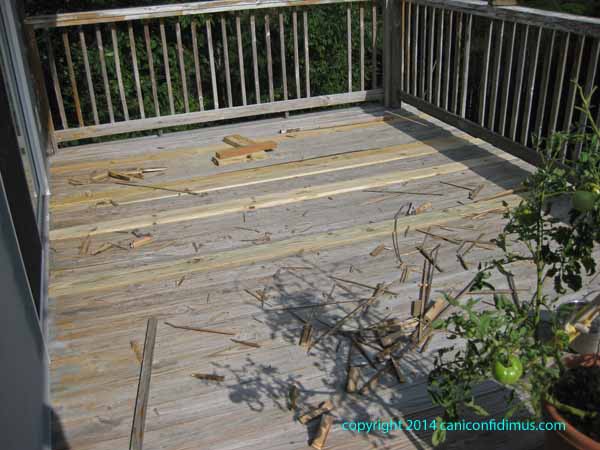
Here are the five new boards I installed over the last two days, along with some of the shards of tongues and grooves plus other assorted chunks of wood removed during the nail extraction process. The missing stiles will be replaced and stained some day.

deckboards

Our spindly tomato plant makes a cameo here, too.

The deck faces due south, a real advantage for solar gain in the winter. Unfortunately, solar gain also works well in the summer, too. Since having a heart problem diagnosed last fall, I have been exercising enough that my weight went down from the upper 160s to the upper 150s. I have been weighing around 157 to 159 each night. This afternoon when I stopped working on the deck, I weighed 150. That means I lost nearly a gallon of fluid in two hours Sunday afternoon. It was 82 F up on the mountain. I don’t know what would have happened if it had been 92 as it has been for the last few days.

I had three glasses of iced tea with supper. I am now planning on one Shock Top Belgian White as a finishing touch. I’ll probably be completely rehydrated by tomorrow around noon, just in time to start working on the deck again.

Dry days

It’s dry here.

On average, July is our third wettest month of the year, with nearly five inches. August is not far behind with about four and a half. The National Weather Service shows 6.42 inches since June 1. We have measured 2.24 inches since May 10. Rome’s official weather is measured at the Richard Russell Airport, which is located north of town and about 10 miles due east of our house. Given that rain in the summer here is usually the result of isolated storms and showers, it’s not particularly remarkable that the official record should differ from ours. We have watched the weather radar track what looks like heavy rain heading towards us from Alabama, only to have it fade away to nothing when it reaches us. We have seen flash flood warnings for Rome from heavy rain south of us. But the top of the mountain is dry.

Is it fall already?

Is it fall already?

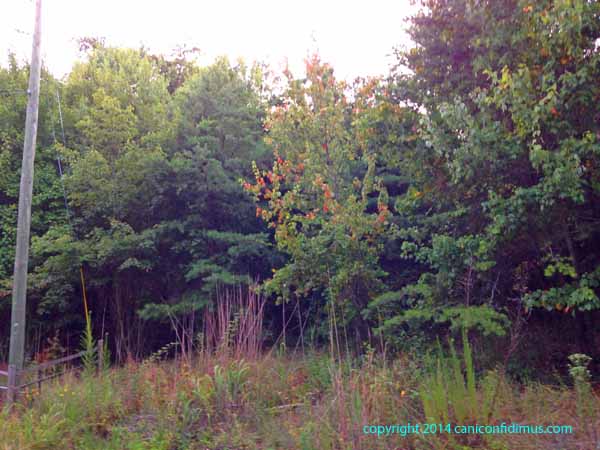
It’s so dry that some of the plants are considering calling it a season and dropping their leaves. The leaves on all the dogwoods are shriveled and drooping. The powdery mildew started the process and now the heat and lack of rain are finishing it. The vinca plants are all bowing their heads. A few leaves here and there are turning on a few maples, the muscadine vines and even the poison ivy. It’s not a trend yet; it’s only a few, but unless we get some rain, I’m afraid it may spread.

August 2

Ninety-seven years ago on this day, August 2, my father was born in the little town of Cave Spring, Ga. Cave Spring is about eight miles as the crow flies from where I now live with Leah. The house where he grew up in Rome would be about the same distance by crow, if it still existed. The house where I grew up would be about a mile closer to us than that house, if it still existed. The house where my father spent the last years of his life is three or four miles further out. A new family is in that house now.

At this point, my father’s life exists only in memory or imagination. The memories seem real, but distant. They’re like postcards from the past. I can remember my father coming to my bed to say goodnight when I was a little boy. He would kneel and lean over me silently for a few moments. It was only many years later that I realized he was praying. I remember standing with him and my brother on the railroad tracks, throwing stones into a little pond. I remember him standing in the driveway when I pulled in from Huntsville, and I remember the scratchy, day-old stubble on his cheek as he hugged me. I remember hiking on the Appalachian Trail with him and my brother. I remember him lying in the hospital bed on the last night of his life, worrying that he wouldn’t be able to help me build the house where Leah and I live.

There are a lot of things I will never know about his life. I can’t ask someone at the Post Office about what happened when he worked there, because he retired 40 years ago. Lots of people have started and finished their postal service careers since he retired. Some of the men who served in his Army reserve unit are still around, but not many at this point; he retired from the reserves even before he retired from the Post Office.

It’s a little jarring when I think that he died over 14 years ago. For a long time after he died I would catch myself thinking that I was going to show him some little thing I had done while working on the house. These days I just feel cheated when I find something he would have been interested in.

I’ve written before about how I feel like both of my parents’ lives are receding into the past, out of my reach, and soon enough out of the memories of any living person. That’s a shame, but it’s the fate shared by billions of us who don’t rate a footnote in the history books.

There’s some small comfort in science fiction. Even reputable physicists don’t reject the possibility of time travel as physically impossible. Leah asks me what in the laws of physics says that time travel is possible. I reply, “Nothing, at least as far as I know.” But that’s the point, at least as I understand it. Nothing in the laws of physics says time travel is possible, but nothing says it isn’t. So if time travel is possible, that means that the past still exists.

I believe that I am cut off entirely from that past, even if it does still exist somewhere. I will never see my father again, but I can at least imagine that somewhere he’s still throwing stones in a pond, hiking the Appalachian Trail, and doing everything else he ever did.